Why the most helpful thing for your baby’s development is often taking something away
When we prepare for a baby, we tend to think in terms of what to add: the bouncer, the activity center, the walker, the swing. Montessori asks a different question first: what might be standing in the way?
In the first year of life, a baby is building their body from the inside out. Head control, rolling, pivoting, crawling, pulling to stand, cruising, and finally walking: each stage prepares the next. No one can do this work for the child. What we can do is make sure nothing blocks it.
Movement is how babies think
In Montessori from the Start, Paula Polk Lillard and Lynn Lillard Jessen describe the first eighteen months as a gradual separation. The baby moves from being carried and held to walking away, on their own two feet, to explore the world.
This is not only physical. When a baby works to reach a ball just beyond their fingertips, they are learning about distance, effort, cause and effect, and above all about themselves: I can get there. My body works. I can make things happen. The authors call this the child’s growing sense of being a capable person. Every time we do the movement for the child, that message becomes a little quieter.
Five things worth removing (or reducing)
- Time in “containers”
Bouncers, swings, activity centers, jumpers, and seats that hold a baby upright are designed for adult convenience. For short moments, that is completely fine. Problems begin when these devices fill most of the baby’s waking hours.
The WHO’s 2019 guidelines on physical activity for under-fives recommend that infants are not restrained for more than one hour at a time (for example, in strollers, high chairs, or strapped to a caregiver’s back). Babies who spend long periods in containers have fewer chances to practice the movements that lead to crawling and walking. They are also more prone to positional flattening of the head.
Baby walkers deserve a special mention. The American Academy of Pediatrics has long advised against them. They are linked to falls and injuries, and they put babies upright before their bodies are ready, so they learn a way of moving that has little to do with real balance. Canada banned their sale in 2004.
The exception: the car seat is non-negotiable for safety. Use it every journey, and take the baby out once you arrive.
- Clothing that restricts
Babies move almost all the time they are awake, and their clothes should allow it. Stiff denim, tight waistbands, dresses that trap the knees when a baby tries to crawl, and bulky decorations on the front all make movement harder.
Instead: soft, breathable layers. Leggings or soft pants that stretch at the knee. And bare feet whenever the room is warm enough. The AAP notes that going barefoot helps babies develop foot strength, balance, and coordination as they learn to walk. When shoes are needed, look for flexible soles.
- Putting the baby in positions they can’t yet reach alone
It is very natural to sit a baby up among cushions or to “walk” them holding both hands above their head. Babies often love it.
From a Montessori perspective, though, each position is best discovered, not placed. A baby who pushes up on their arms, rolls to the side, and finds their own way to sitting has built the strength and balance that sitting requires. A baby who is placed in sitting often can’t get out of it, and can’t yet catch themselves when they tip. The same applies to standing and walking.
This does not mean never holding your baby upright. Carrying, cuddling, and being held face to face are essential. It means letting the milestones belong to the child.
- Screens
The book was written when the concern was the television in the corner. Today it is the phone in every hand, but the principle is the same. A screen captures a baby’s attention through constant movement and change, and the baby becomes still and absorbed while their own development pauses.
The WHO recommends no screen time before the age of two, and the American Academy of Pediatrics makes an exception only for video calls with family. This is less about the content and more about what the screen replaces: floor time, exploration, and real interaction with the people around them.
- Rescuing too quickly
This one is the hardest, because it comes from love. The baby strains toward a toy, fusses, and we hand it over. The baby is stuck in a corner, and we lift them out.
Sometimes, of course, we should step in. But often the struggle is the work. Montessori invites us to pause before helping: to observe whether the baby is frustrated beyond what they can manage, or simply working hard at the edge of a new skill. A small wait, a calm voice (“You’re working so hard to reach that ball”), and a toy placed just a little closer can give the child both support and the satisfaction of doing it themselves.
What to offer instead
Once the obstacles are out of the way, what the baby needs is surprisingly simple:
- A safe floor space. A firm mat or rug in each room where the baby spends time, so they can be near you while they move.
- Tummy time while awake, from the first days. Babies should always sleep on their backs. When awake, time on the tummy builds the neck, shoulder, and arm strength that every later movement depends on. The WHO suggests at least 30 minutes a day, spread throughout the day, for babies not yet mobile. Start with a few minutes at a time.
- A mirror at floor level. Securely fixed, made of safety glass or acrylic. It gives the baby something interesting to lift their head for, and a second view of the room.
- Something to reach for. A ball or rattle placed just beyond their grasp, not out of reach entirely.
- Things to pull up on. A low, stable shelf, a sturdy footstool, or a wall-mounted bar at the baby’s chest height.
- A walker wagon, not a walker. A heavy, stable push cart the baby can pull up on and push while they walk, entirely under their own control.
- A home that is safe to explore. Covered sockets, secured furniture, gates on stairs. When the environment is safe, you don’t need to restrict the child.
- Time. Unhurried, unscheduled time at home, in familiar surroundings, lets the baby study their space before they move through it.
A note on babywearing
The original book lists slings and carriers among the devices that limit movement. Current evidence gives a more nuanced picture. Babywearing supports closeness, responsive care, and the baby’s regulation, especially in the early months. The key is balance: a baby held in a carrier during a walk is very different from a baby who spends most of the day in one. Think of the floor as the baby’s main workspace, and your arms and the carrier as places of connection.
At Casa del Mar Montessori
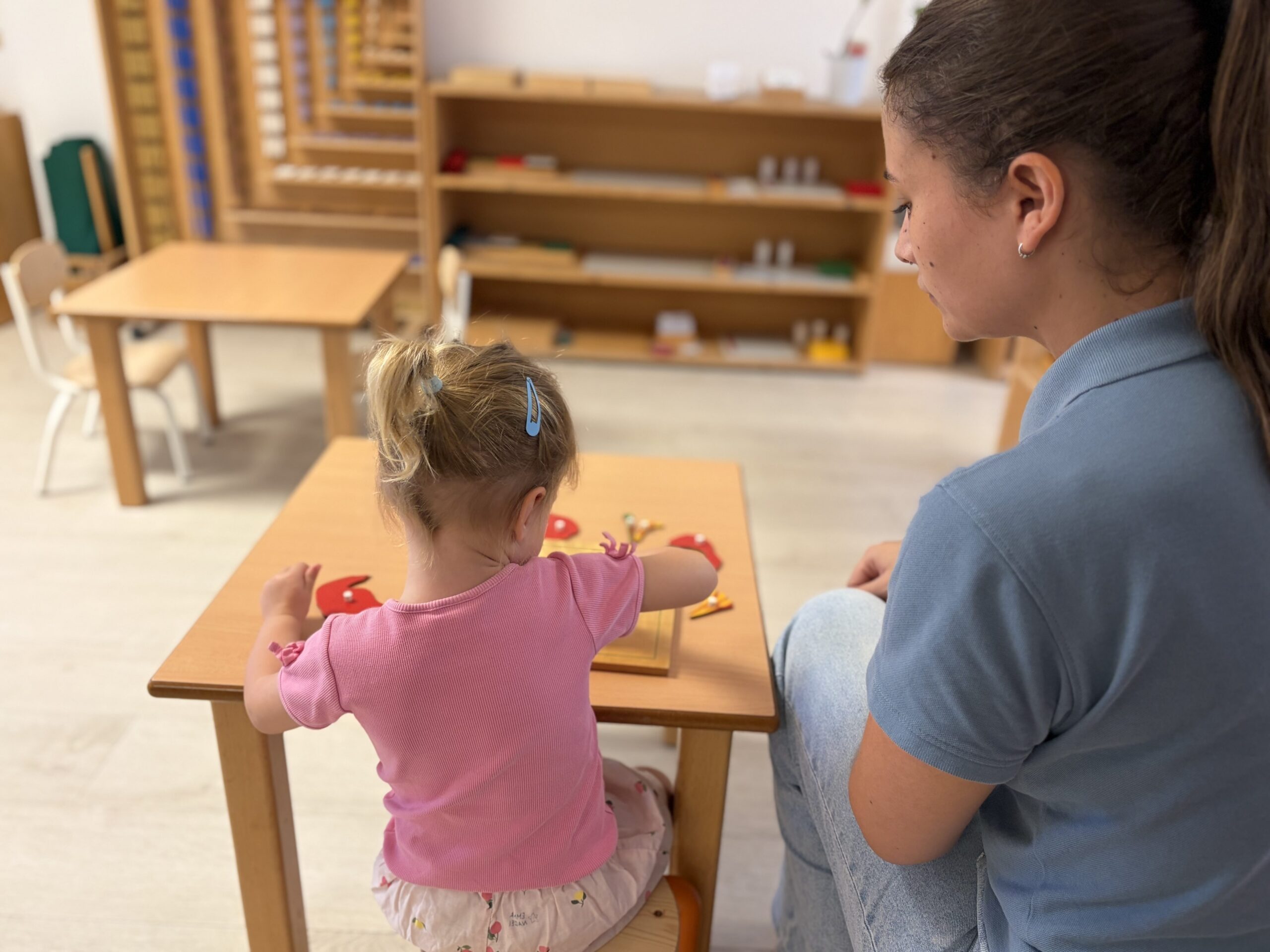
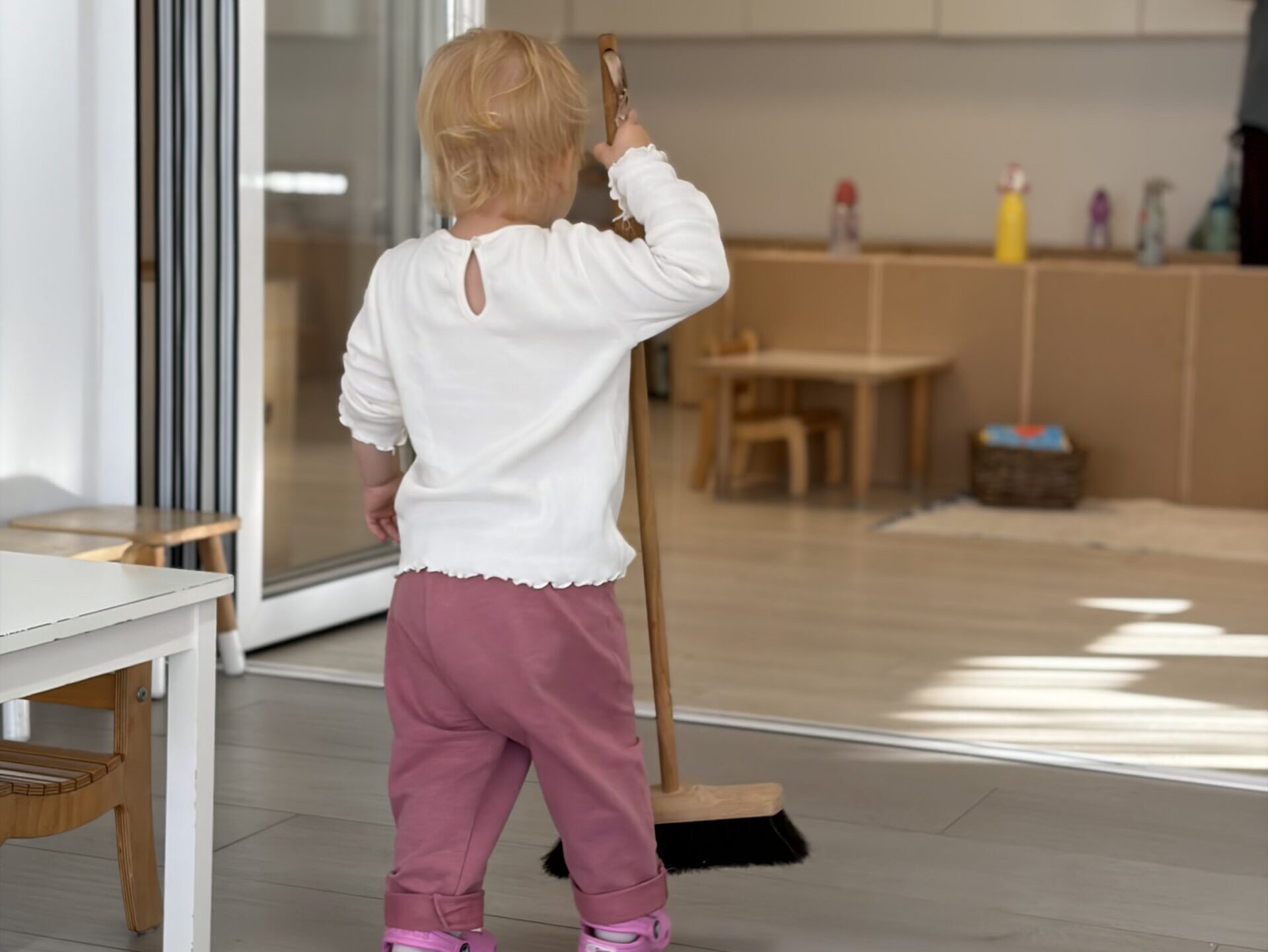
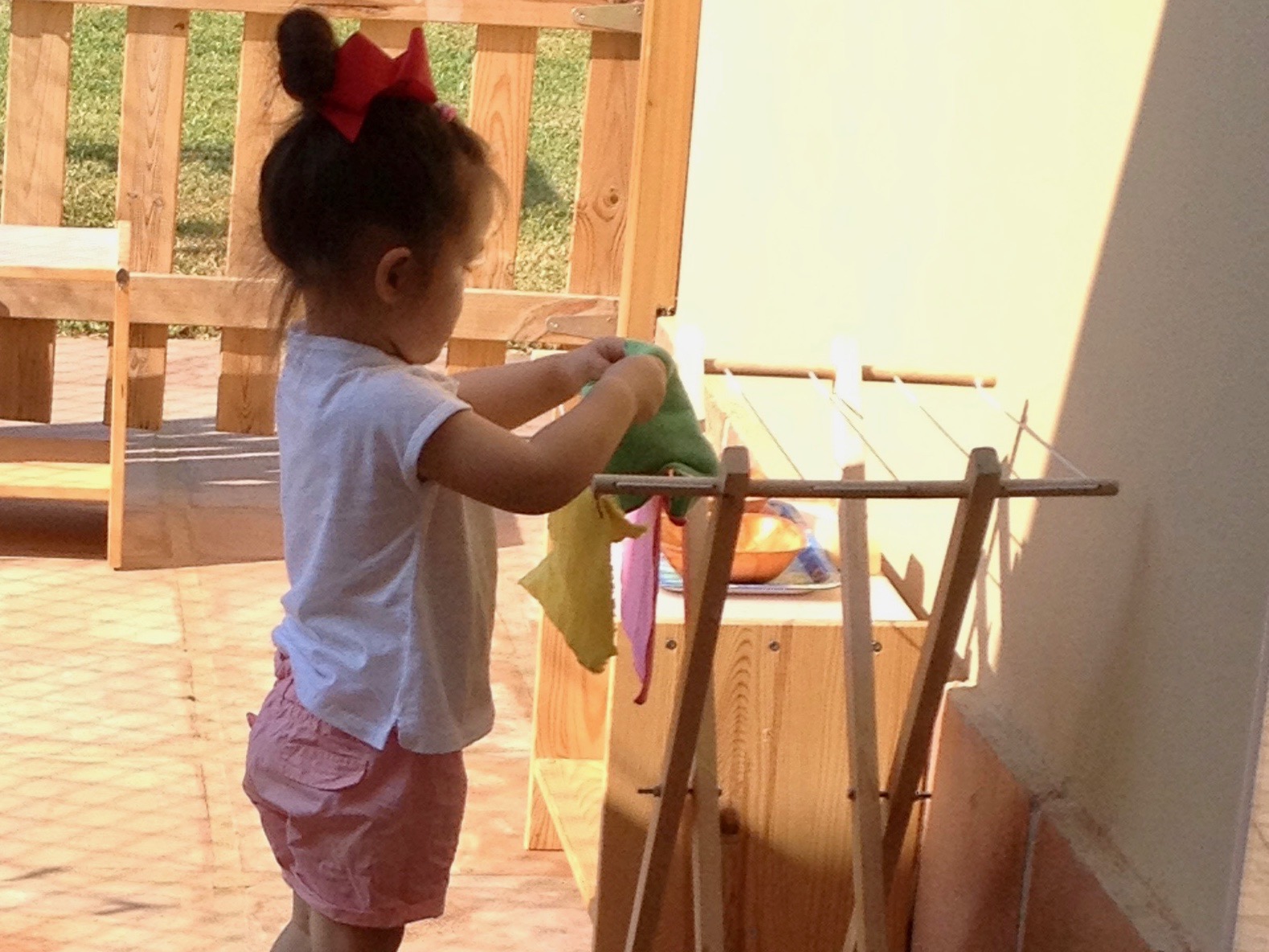
In our Nido and Infant Community, we apply these principles every day. Our environments have open floor space, low furniture, and materials placed within the child’s reach. We also have no containers, and adults who have learned to observe before they intervene. We don’t hurry children toward milestones, and we don’t hold them back. We try to protect the work they are already doing.
References
- Lillard, P. P., & Jessen, L. L. (2003). Montessori from the Start: The Child at Home, from Birth to Age Three. Schocken Books.
- World Health Organization (2019). Guidelines on physical activity, sedentary behaviour and sleep for children under 5 years of age.
- American Academy of Pediatrics. HealthyChildren.org: guidance on baby walkers, tummy time and first shoes.