
In our Elementary program, students take part in a dedicated subject called Digital Citizenship, where they learn how to navigate the digital world in a safe, responsible, and thoughtful way.
We follow the curriculum developed by Common Sense Education, a globally recognized organization that provides research-based resources and activities to help students become responsible digital citizens.
What do students learn?
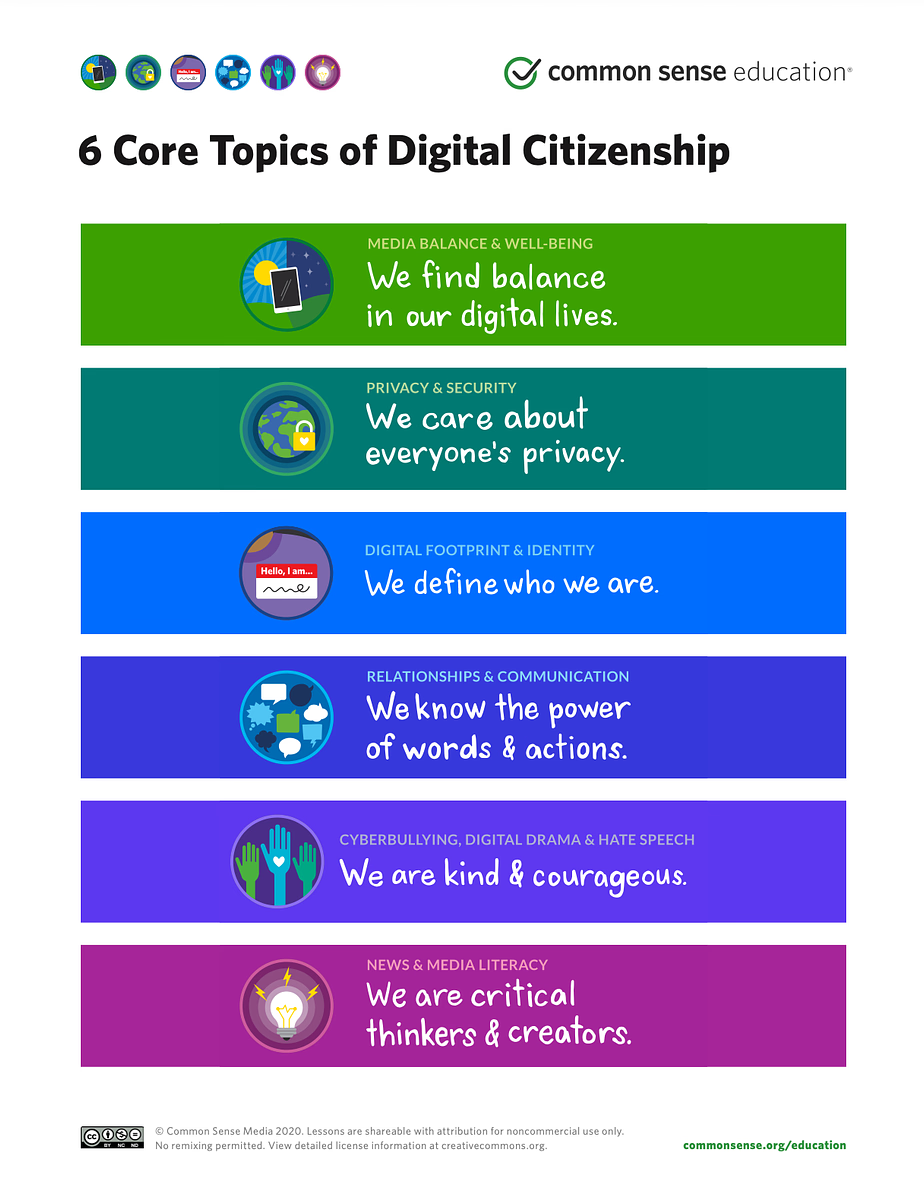
Throughout the program, students explore essential topics such as:
🔹 Digital balance & well-being – building healthy technology habits and managing screen time.
🔹 Digital footprint & identity – understanding how online actions shape who we are.
🔹 Privacy & security – learning how to protect personal information.
🔹 Online relationships & communication – interacting respectfully and responsibly.
🔹 Cyberbullying awareness – recognizing, preventing, and responding to negative online behavior.
🔹 Media literacy – thinking critically about online content and distinguishing reliable information from misinformation.
🔹 Digital footprint & identity – understanding how online actions shape who we are.
🔹 Privacy & security – learning how to protect personal information.
🔹 Online relationships & communication – interacting respectfully and responsibly.
🔹 Cyberbullying awareness – recognizing, preventing, and responding to negative online behavior.
🔹 Media literacy – thinking critically about online content and distinguishing reliable information from misinformation.
More than technology
Digital Citizenship is not just about using devices — it is about developing critical thinking, empathy, responsibility, and ethical decision-making in digital environments.
In today’s connected world, these skills are essential. Our goal is to empower students to become confident, respectful, and informed participants in the digital community.
Children are growing up with the power of digital media and technology to explore, connect, create, and learn in new ways. With this power, young people have great opportunities, but they also face challenges and dilemmas. Schools are dealing with the ramifications, including issues such as online safety, cyberbullying, privacy, hate speech, misinformation, and digital distraction. To address these issues, schools are creating a positive culture around media and technology by incorporating digital citizenship education as part of their curricula.
Digital citizenship is the responsible use of technology to learn, create, and participate.
Common Sense’s Digital Citizenship Curriculum addresses critical issues facing children in a fast-changing world of media and technology. The innovative lessons teach students to think critically and develop the habits of mind to navigate digital dilemmas in their everyday lives. It was created in collaboration with Project Zero at the Harvard Graduate School of Education, guided by research with thousands of educators and parents.
The Digital Citizenship Curriculum is available to educators and schools for free, thanks to the generous support of our funders.
Schools can use this program to bring students, families, and educators together in a whole-community approach to create a positive culture around media and technology.